50/30/20 Budget Rule in 2026: Does It Still Work?
Does the 50/30/20 budget rule still work in 2026? Worked examples at $3k/$5k/$8k income, where it breaks in HCOL cities, and better alternatives.
Affiliate disclosure: This article contains affiliate links. We may earn a commission at no extra cost to you.
The 50/30/20 budget rule still works in 2026 as a starting framework — 50% of after-tax income to needs, 30% to wants, 20% to savings and debt — but it breaks down in high-cost-of-living cities where needs alone exceed 50%. Here is how to apply it, with worked examples, and what to use when it fails.
Free: Zero-Based Budget Spreadsheet
Trusted by 5,000+ users
What the Rule Is
Popularized by Senator Elizabeth Warren, the rule splits after-tax income:
No spam. Unsubscribe anytime.
- 50% Needs: housing, utilities, groceries, insurance, minimum debt payments, transport
- 30% Wants: dining out, subscriptions, travel, hobbies
- 20% Savings & Debt: emergency fund, retirement, extra debt payoff
Its strength is simplicity. You do not track 40 categories — just three buckets.
Worked Examples (After-Tax Monthly)
| Income | Needs (50%) | Wants (30%) | Savings (20%) |
|---|---|---|---|
| $3,000 | $1,500 | $900 | $600 |
| $5,000 | $2,500 | $1,500 | $1,000 |
| $8,000 | $4,000 | $2,400 | $1,600 |
At $3,000/month in many US metros, rent alone can exceed $1,500 — which is exactly where the rule starts to strain.
When 50/30/20 Breaks Down
In high-cost-of-living (HCOL) cities — coastal metros especially — housing plus essentials routinely consume 60–70% of after-tax income. Forcing those into a 50% bucket is fantasy. The rule also fails for high earners, who can often save far more than 20% and should.
Use 50/30/20 as a diagnostic: if your needs are well above 50%, the rule is telling you housing or fixed costs are the problem to attack, not your coffee budget.
Alternatives When It Fails
Zero-Based Budget
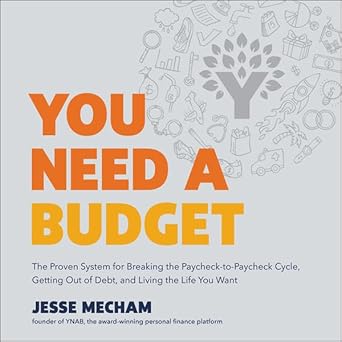
Every dollar gets a job until income minus allocations equals zero. More work, more control — ideal for tight budgets where 50/30/20 has no slack. The You Need a Budget book is the best primer on this method.
Pay-Yourself-First
Automate savings the day you are paid, then live on the rest. Lower friction than tracking categories and behaviorally powerful — covered well in I Will Teach You to Be Rich ($10.17).
Adjusted Ratios
In HCOL areas, a 60/20/20 or 70/10/20 split is more honest. The 20% savings target should be the last thing you cut, not the first.
For running the numbers, a Texas Instruments BA II Plus financial calculator ($35.99) makes loan and savings projections quick.
FAQ
Is it pre-tax or post-tax income? After-tax (take-home). Applying it to gross income overstates what you can spend.
What if my needs are over 50%? That is a signal, not a failure. Protect the 20% savings, trim wants, and treat fixed costs (rent, car) as the real lever.
Is 20% savings enough for retirement? For early or aggressive goals, no. Treat 20% as a floor; high earners should push 30%+.
Affiliate Disclosure
Discussion
Sign in with GitHub to leave a comment. Your replies are stored on this site's public discussion board.