Top Cashback Credit Cards Worth Getting in 2026
We may earn a commission if you make a purchase through our links.
The best cashback credit cards for 2026 including Citi Double Cash, Chase Freedom Flex, and Blue Cash Preferred — plus the optimal two-card combo strategy.
FTC Disclosure: This article contains affiliate links. When you sign up for a card through our links, we may earn a commission at no additional cost to you. This helps us provide free, expert content. We only recommend cards our team has thoroughly researched and verified.
The average American household spends $6,000+/month on essentials and lifestyle. Pay with cash or debit and you earn nothing. Pay with the right cashback card and you can pocket $700-$1,500+ per year on spending you would do anyway.
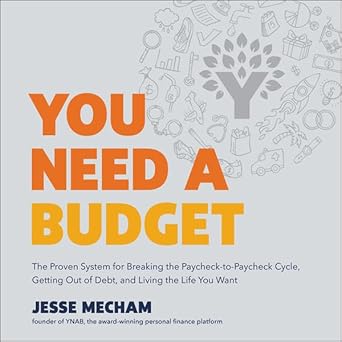
Free: Zero-Based Budget Spreadsheet
Trusted by 5,000+ users
The catch: not every cashback card is worth the friction. Some have rotating categories that require activation. Some charge annual fees that only pay off above certain spending levels. Some have effective caps that quietly kneecap heavy spenders.
Below are the seven cards we keep coming back to in 2026 — and the optimal 2-card or 3-card combo that captures 95% of household spending at the best rate available.
No spam. Unsubscribe anytime.
Quick Answer: Best Cashback Card for Most People (2026)
If you only want one card and refuse to track categories:
- Citi Double Cash — flat 2% on everything, $0 annual fee. Effectively turns every dollar of spending into $0.02 returned. Beat 99% of debit/cash users immediately.
If you are willing to optimize across 2 cards:
- Citi Double Cash (2% catch-all) + Blue Cash Preferred (6% groceries, 6% streaming, 3% gas/transit). Annual return on typical household spending: $900-$1,200.
Below: the full breakdown for each card, when it makes sense, and the math behind the combo.
1. Citi Double Cash — Best Flat-Rate (2% on Everything)
Cashback: 1% when you buy, 1% when you pay your bill (2% total) Annual fee: $0 Welcome bonus: $200 cash back after spending $1,500 in 6 months (rotates) APR: 18.99% - 28.99% variable (carry a balance = total wipeout — see warning below)
Why it wins: No categories to track, no quarterly activations, no caps. The 2% applies to literally every purchase — grocery, gas, online, recurring bills, travel. Pair it with one category card (groceries or dining) and you have a setup that beats single-card optimizers.
Best for: People who want to set-it-and-forget-it, anyone who hates tracking categories, anyone who spends heavily in "uncovered" categories (utilities, healthcare, miscellaneous).
Skip if: You spend >$500/month at supermarkets — the Blue Cash Preferred returns 3x more on that bucket.
2. Blue Cash Preferred (Amex) — Best Grocery + Streaming Card
Cashback: 6% at US supermarkets (up to $6,000/year in purchases), 6% on select US streaming, 3% on transit and US gas, 1% on everything else Annual fee: $95 (waived first year on many promos) Welcome bonus: $250 statement credit after $3,000 spend in 6 months Cap: 6% rate maxes after $6,000 in groceries/yr ($500/mo); above that it drops to 1%
Why it wins: No other consumer card touches 6% on US supermarkets. For a family spending $500/month on groceries, that is $30/month in cashback from groceries alone ($360/year). Add the streaming and gas categories and the $95 fee is recouped at roughly $160/month in supermarket spend.
Best for: Households with $400+/month in supermarket spend. The fee breaks even fast.
Skip if: You shop at Costco/Walmart Supercenter (those are coded as warehouses or supercenters, not supermarkets — 1% rate). Look at Capital One Savor instead.
3. Chase Freedom Flex — Best 5% Rotating Categories
Cashback: 5% on quarterly rotating categories (capped $1,500/qtr), 5% on Chase travel, 3% on dining + drugstores, 1% on everything else Annual fee: $0 Welcome bonus: $200 cash back after $500 spend in 3 months Requires: Quarterly category activation (sets a calendar reminder)
Why it wins: Rotating 5% categories in 2026 have included grocery stores, gas, Amazon, Target, PayPal, streaming, and home improvement. If you hit each $1,500 cap, that is $300/year in bonus cashback on top of the always-on 3% dining.
Best for: Disciplined users who will activate categories quarterly and shift spend into the bonus category for that quarter.
Skip if: You consistently forget activations or do not shift spending. The 1% catch-all rate is mediocre.
4. Discover it Cash Back — Best First-Year Doubler
Cashback: 5% on quarterly rotating categories ($1,500/qtr cap), 1% on everything else, all cashback doubled at end of year 1 Annual fee: $0 Welcome bonus: None — but the year-end double-up effectively turns 5%/1% into 10%/2% for the first 12 months Best for new credit users: Yes — soft credit pull pre-approval, accepts thinner credit profiles than Chase/Amex
Why it wins: The cashback match doubles every dollar earned in year one. If you maxed every quarterly 5% category ($300/qtr cashback × 4 quarters = $1,200), you walk away with $2,400 in the first year. No other entry-level card matches this.
Best for: First-time credit users, anyone with a thinner credit file, students.
Skip if: You already have great credit and a Chase Freedom Flex — the long-term economics favor Chase after year one.
5. Capital One Savor — Best Dining + Entertainment
Cashback: 3% on dining, entertainment, popular streaming, and grocery stores (excluding Walmart/Target supercenters), 1% on everything else Annual fee: $0 (Savor One — the no-fee version) Welcome bonus: $200 cash bonus after $500 in first 3 months Catch: No 6% supermarket tier — but no $6K cap either
Why it wins: Replaces the Blue Cash Preferred for households that shop at Walmart Supercenter or Costco (which Amex codes as 1% supermarkets). Capital One's coding is more generous on grocery stores. The 3% on dining and entertainment also captures restaurants, takeout, and ticket purchases at flat rate — no rotating categories.
Best for: Frequent diners, Walmart/Costco shoppers, anyone who wants groceries + dining at one card.
6. Wells Fargo Active Cash — 2% Cash Catch-All Alternative
Cashback: Unlimited 2% on every purchase Annual fee: $0 Welcome bonus: $200 cash rewards bonus after $500 spend in 3 months APR: 0% intro for 15 months on purchases + balance transfers
Why it wins: Identical earn rate to Citi Double Cash, but with a 15-month 0% intro APR — the strongest 0% offer paired with a 2% catch-all card available in 2026. If you have a large planned purchase (appliance, medical bill, etc.) and want to spread it over 15 months interest-free while still earning 2%, this is the card.
Best for: People making a large purchase they want to pay off interest-free over 12-15 months.
7. US Bank Cash+ — Customizable Categories
Cashback: 5% on TWO categories of your choice (capped $2,000/qtr combined), 2% on one always-on category (groceries, gas, or restaurants), 1% on everything else Annual fee: $0 Welcome bonus: $200 statement credit after $1,000 spend in 4 months
Why it wins: Unlike rotating-category cards, you choose your own 5% categories each quarter from a list (utilities, internet/streaming, cell phone, fast food, department stores, electronics, etc.). The cell phone + utilities combo alone returns $50-$100/quarter for most households.
The Optimal Two-Card Combo
If you only adopt two cards, this combo captures 90%+ of household spending at the best available rate:
| Category | Card to use | Effective rate |
|---|---|---|
| US supermarkets (up to $6K/yr) | Blue Cash Preferred | 6% |
| US streaming | Blue Cash Preferred | 6% |
| US gas + transit | Blue Cash Preferred | 3% |
| Everything else | Citi Double Cash | 2% |
Math for a $6,000/month household ($72K/yr):
- Groceries (~$6K cap maxed at $500/mo): $360 cashback
- Streaming ($60/mo × 12): $43 cashback
- Gas/transit ($300/mo × 12 × 3%): $108 cashback
- All other spending (~$3,500/mo × 12 × 2%): $840 cashback
- Total annual cashback: ~$1,351 ($95 fee subtracted = $1,256 net)
For comparison, a single-card 2% setup on the same spend = $1,440 gross with no fee — but you would lose $251 by skipping the grocery bonus on the Amex.
The 3-card upgrade: Add Chase Freedom Flex for the rotating 5% categories. Net: another $150-$300/year on top of the combo.
When Cashback Beats Travel Points (and When It Loses)
Cashback wins:
- You are not a frequent traveler
- You value cash in your bank account over potential value
- You do not want to track point transfer partners
- You want predictability
Travel points (Sapphire Preferred, Venture X, etc.) win:
- You travel 6+ times per year
- You can transfer points to airline/hotel partners at 1.5-2x cents-per-point
- You have time to optimize redemptions
If you are reading "cashback credit cards" articles, cashback is the right answer. Travel point optimization is a different game.
Three Rules That Make This Whole Strategy Work
Rule 1: Never carry a balance. Cashback APRs are 18-29%. A single month of carrying a $1,000 balance erases $20+ in interest — wiping out a year of 2% cashback on that same $1,000. Cashback ONLY works if you pay in full every month.
Rule 2: Automate the payments. Set autopay for the statement balance. The single biggest cashback-killer is forgetting to pay on time — one late fee ($40) erases two months of cashback.
Rule 3: Track the categories. A free spreadsheet column or a tool like WalletHub Premium tracks which card to use for which purchase. The mental overhead is the real cost of the optimization game.
Bottom Line
For 95% of US households:
- One card: Citi Double Cash — 2% on everything, no fee, no thinking
- Two cards: Citi Double Cash + Blue Cash Preferred — captures groceries at 6%, everything else at 2%
- Three cards: Add Chase Freedom Flex for the rotating 5% categories
Annual cashback returns of $700-$1,500+ are achievable for typical household spending. That is real money returned for behavior you were going to do anyway — pay for groceries, fill up the gas tank, stream Netflix.
The only condition: pay your statement balance in full every month. Without that, every other word in this article is irrelevant.
For deeper personal finance strategy, see our guide on building a 6-month emergency fund and our best high-yield savings accounts comparison — because the cashback dollars need to land somewhere that actually grows them.
Affiliate Disclosure
Discussion
Sign in with GitHub to leave a comment. Your replies are stored on this site's public discussion board.