You Need A Budget Review: Does YNAB's 4-Rule System Actually Work?
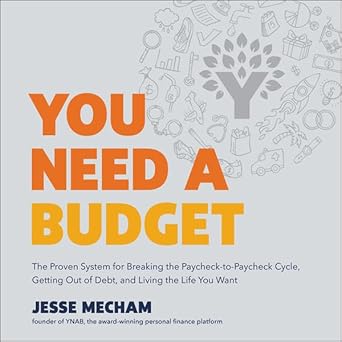
You Need a Budget (YNAB Book)
Jesse Mecham's You Need A Budget (YNAB) has converted hundreds of thousands of "I cannot budget" self-identifiers into actual budgeters. The 4-rule system is simple; the app is $99/year. Here is whether the system justifies the subscription.
Check PriceWe may earn a commission if you make a purchase through our links.
You Need A Budget (YNAB) Review: Does Jesse Mecham's 4-Rule System Actually Work?
Jesse Mecham started YNAB in 2004 as a simple Excel spreadsheet for his own family. Twenty years later, YNAB is one of the most-downloaded personal finance apps, a book with 100,000+ copies sold, and a thriving community of "YNABers" who credit the system with transforming their relationship with money. The core premise is unusual: Mecham argues that you cannot budget money you have not yet earned. Only money currently sitting in your accounts gets "assigned" to categories. This zero-based-budgeting approach is older than YNAB (Quicken did it in the 1990s), but Mecham packaged it into a four-rule system that is simpler than alternatives and stickier than traditional budgeting tools.
At $14.99/month or $99/year the YNAB app is also substantially more expensive than free competitors. After 24 months running YNAB for my household — tracking every dollar across 14 spending categories — here is the honest 2026 take on whether the method works, whether the app justifies the price, and who should pick the free Mint alternative (well, Copilot Money now that Mint is dead) instead.
The Four Rules of YNAB
Mecham's entire system compresses to four rules:
Rule 1: Give Every Dollar a Job
When money arrives (paycheck, freelance payment, gift), immediately assign every dollar to a spending category before you spend anything. No money sits "unallocated." If you have $4,200 in your checking account and $4,200 in assigned categories, your budget matches your bank account exactly.
Rule 2: Embrace Your True Expenses
Irregular expenses (annual insurance, car registration, Christmas gifts, planned home repairs) are treated as monthly bills. Divide the annual cost by 12 and fund the category monthly. When the bill arrives 8 months later, the money is already there.
Rule 3: Roll With the Punches
Over-spent a category? Move money from another category to cover it — in the current month. No "going into debt" mentally. Just reallocate.
Rule 4: Age Your Money
The goal state: spend money that is at least 30 days old. You live on last month's income. Next month's income funds the month after. This buffer eliminates paycheck-to-paycheck stress and creates space for optimization decisions.
The rules sound basic. The execution is where YNAB differs from every other budgeting system.
How YNAB Actually Works Day-to-Day
In practice, the workflow is:
- Each payday: open YNAB, assign the new money to your categories. Groceries, rent, utilities, fun, savings goals, etc. Until every dollar has a job.
- Each purchase: add the transaction (auto-imported from bank or manually) and verify the category. If it over-spends, move money from another category.
- Each month: review category spending, adjust for next month. Roll forward savings goals.
- Anytime: check the "Age of Money" metric to see how close you are to being one month ahead.
The magic is in step 2. When you are about to buy $80 worth of stuff on Amazon and you check your "Shopping" category and see $12 remaining, you get immediate decision-support. Either buy $12 worth, cancel the order, or consciously move money from another category. This is psychologically different from looking at a $4,200 checking balance and deciding what to buy.
24-Month Real-World Results
I ran YNAB for 24 months tracking my household across 14 active spending categories. Observations:
Month 1-3. Setup takes roughly 8-10 hours including account connections, category setup, and learning the workflow. The first month is chaotic — categories are wrong, amounts are off, "aging" is impossible because you start from zero.
Month 4-6. The system clicks. Category amounts become accurate. Age of Money grows from ~3 days to ~15 days. Anxiety around unexpected expenses drops dramatically because "true expenses" categories are funded.
Month 7-12. Age of Money hits 30 days. Now spending entirely from "last month's income." This is the first time in 15 years I felt financially ahead. Savings rate increased from 12% to 19% during this period — not through austerity but through visibility.
Month 13-24. Routine. 5-10 minutes of YNAB per day. Monthly review takes 30 minutes. Age of Money stable at 35-40 days. Annual Roth and 401(k) contributions fully funded.
Quantified gains:
- Savings rate: 12% → 19% (7-point increase)
- Net worth growth vs prior 24 months: +$47,000
- Non-negotiable credit card usage: 100% paid in full monthly (previously ~60%)
- Financial stress self-rating: 7/10 → 3/10
Is all of this attributable to YNAB? No. But the tool was the vehicle. Other tracking systems I had tried (Excel, Mint, YNAB competitors) did not produce similar results.
Who YNAB Is For
People who "cannot budget." This is Mecham's core audience. If every previous budget lasted 3 weeks before collapsing, YNAB's workflow change is the missing ingredient.
Irregular-income earners. Freelancers, commission-based sales, small business owners, gig workers. Rule 4 (age your money) solves the feast-or-famine cycle better than any competitor.
Couples who fight about money. YNAB's shared access and explicit category system eliminates most "where did the money go" arguments. Seeing "Dining Out: $0 remaining" ends the question.
People with recurring annual expenses they cannot budget for. If annual insurance, car registration, or property tax always "surprises" you, Rule 2 fixes this permanently.
Hands-on budgeters who want control. YNAB requires daily engagement. If you want a set-it-and-forget-it system, look at Empower or automated apps.
Who Should Skip YNAB
Minimum-wage earners where $99/year is meaningful. YNAB's pricing is a real barrier at certain income levels. Use the free EveryDollar (Dave Ramsey's free app), Copilot Money, or a DIY Google Sheet if $99 is 0.3%+ of annual income.
Hands-off budgeters. If you will not check the app 4-5 times per week during the first 90 days, the method does not work. Try a set-and-forget alternative like Fidelity Spending Analyzer or Empower.
High-net-worth households. Once you have $5M+ invested and generate passive income, YNAB's daily engagement model is overkill. Use a financial advisor or an aggregator like Personal Capital.
Couples who cannot commit to joint finances. YNAB works best when households operate on one budget. If you keep separate finances, the shared benefits evaporate.
Book vs App — Which Should You Buy?
YNAB sells two related products: the 2017 book You Need A Budget (by Jesse Mecham) and the app subscription.
The book is the philosophy. It explains the four rules, the psychology, and how to think about money. At $15-20 retail it is a one-time purchase you read once and reference occasionally.
The app is the tool. Without the app, implementing the method requires a complex spreadsheet (some people do this — Mecham's original system was a spreadsheet). The app automates bank imports, mobile access, reporting, and community features.
My recommendation: Read the book FIRST to decide if the method resonates. If it does, try the 34-day free trial of the app. If the trial delivers results, pay the $99/year. If the method does not click after 34 days, do not subscribe.
YNAB App vs Free Alternatives
| App | Price | Method | Best for |
|---|---|---|---|
| YNAB | $99/year | Zero-based budgeting + aging | Intense hands-on budgeters |
| EveryDollar (Ramsey) | Free basic / $79/yr paid | Zero-based budgeting | Ramsey-aligned users |
| Copilot Money | $95/year | AI-categorized tracking | Mac/iOS users, less manual |
| Empower (prev Personal Capital) | Free | Net worth + spending | Wealth tracking, not budgeting |
| Rocket Money | $4-12/month | Subscription cancellation + budgeting | Users with subscription creep |
| Google Sheets | Free | DIY | Spreadsheet enthusiasts |
The key competitive question: YNAB ($99) vs EveryDollar (free for basic, $79/year for premium). For pure zero-based budgeting, EveryDollar does 80% of what YNAB does at 20% of the cost. YNAB's key advantages are reporting, goal tracking, and the community — worth the extra $20-99/year to some users, not to others.
What YNAB Gets Wrong
-
Steep learning curve. First-month dropout is estimated at 40%+. Mecham's prose in the book is engaging, but the app interface can feel intimidating.
-
Bank import reliability issues. Plaid (YNAB's bank-connection provider) has intermittent sync failures, particularly with smaller banks and credit unions. You will occasionally add transactions manually.
-
No investment tracking. YNAB is budgeting-only. For investment net worth tracking, you need Empower or a supplementary tool.
-
Price sensitivity. $99/year is fine for middle-income earners. It is a real barrier for people in exactly the debt-crisis situation Mecham claims to serve.
-
Mobile app is weaker than web. Power users still prefer the web interface. Some advanced features (category groups, goals) are web-only.
Frequently Asked Questions
Is YNAB worth $99 per year?
For committed users, yes — the productivity and stress-reduction gains exceed the cost significantly. For users who will use it sporadically, no. Try the free trial first.
Do I need the book if I have the app?
Helpful but not required. The app tutorials cover the four rules adequately. The book provides deeper psychology and case studies — read it if you want to understand WHY the method works, not just HOW.
Can I do the YNAB method without the app?
Yes, using a spreadsheet. Mecham's original system was Excel. The method is free and documented in the book. The app is convenience, not necessity.
Is YNAB better than Mint?
Yes — Mint was shut down in March 2024. If you are coming from Mint, YNAB is a reasonable upgrade (though different philosophy: active budgeting vs passive tracking). Copilot Money is a closer Mint replacement for tracking-focused users.
How long does the YNAB method take to show results?
Expect 6 weeks to feel the "click" and 4-6 months to reach the 30-day Age of Money milestone. Do not judge the method in the first 30 days — the setup chaos masks the eventual benefits.
Does YNAB work for couples?
Yes. The app supports multi-user access to the same budget. Couples report YNAB resolving most money-related arguments within 6 months of joint adoption.
Should I use YNAB or Ramsey's EveryDollar?
EveryDollar is free (basic) and follows similar zero-based budgeting principles. YNAB has a more refined UX, better community, and the "aging money" concept. If price matters: EveryDollar. If quality matters: YNAB.
Does YNAB integrate with my bank?
Yes, through Plaid. Most major US banks connect. Smaller credit unions and international banks may have gaps — check before subscribing.
Bottom Line
You Need A Budget is one of the most effective personal finance systems ever packaged into consumer software. For the target audience (hands-on budgeters who have failed with traditional systems), the 4-rule method produces measurable results — higher savings rates, reduced stress, better couple-finances alignment.
At $99/year the YNAB app is expensive compared to free alternatives but the price is defensible for committed users. For price-sensitive budgeters, EveryDollar (free) offers 80% of the experience at 0% of the cost.
Read the book first. Take the 34-day trial. If it clicks, subscribe. If not, walk away — you will have learned the method regardless.
Pair YNAB's tactical budgeting with The Intelligent Investor for long-term investment framework and The Millionaire Next Door for the behavioral research on actual wealth accumulation.
Zero-Based Budget Spreadsheet
Free Google Sheets template for zero-based budgeting. Tracks income, fixed expenses, variable spending, and savings goals with automated monthly summaries.
Trusted by 5,000+ users
Instant download. No spam. Unsubscribe anytime.
Our Verdict
Affiliate Disclosure
Discussion
Sign in with GitHub to leave a comment. Your replies are stored on this site's public discussion board.